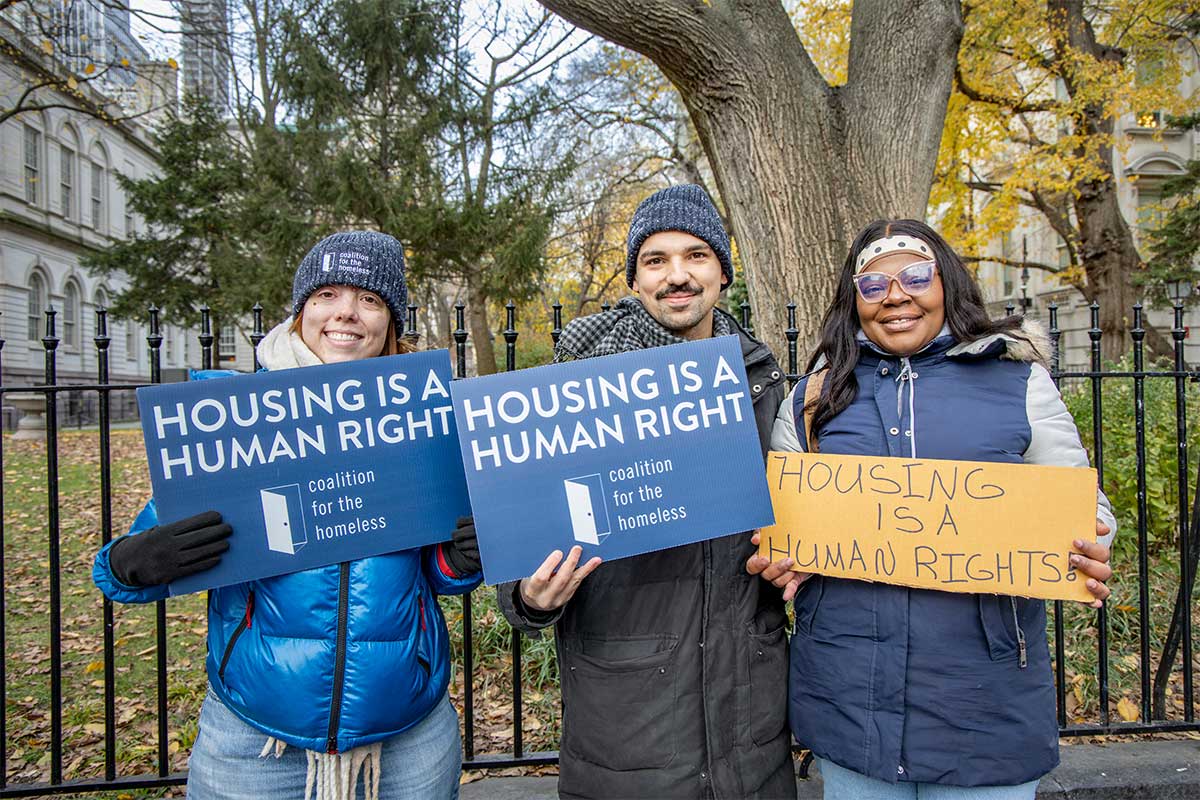
This post is part of a series highlighting the perspectives of our incredible 2026 Intern Cohort.
Homelessness in New York City is incredibly prevalent. While this crisis is widespread and constantly being criticized and discussed on various news and social media platforms, our municipal government has struggled to effectively address the homelessness crisis.
On average, a total of 87,442 individuals (adults and children) currently reside in shelters operated by the Department of Homeless Services (DHS). Meanwhile, an estimated 5,000 people are currently unsheltered. Homelessness is generally defined as an individual or family living without access to sufficient nighttime residence. This includes people staying in congregate shelters, safe havens, transitional housing, and those living on the street, with tens of thousands of individuals predominantly residing in congregate shelters.
What is a Congregate Shelter?
Congregate shelters are temporary group-living facilities that are open-style rooms with multiple cots/beds. Depending on the facility, congregate shelters could house up to dozens of individuals in one communal space. Despite providing shelter, the nature of congregate shelters often dissuades unhoused individuals from either entering or re-entering the shelter system, as such shelters are often overcrowded, understaffed, dangerous, and chaotic.
How Do We Improve Congregate Shelters?
As an alternative to congregate shelters, the city has invested in safe havens and stabilization beds (both forms of low-barrier shelters but with varying levels of accommodations provided). Safe havens do not hold strict curfews for residents and offer a less restrictive environment, while ensuring each client receives assistance with permanent housing placement, as well as mental and physical health services.
Transferring the tens of thousands of individuals residing in congregate shelters to safe haven facilities is simply not financially feasible. As a more realistic approach to improving housing space for unhoused individuals, congregate shelters should be restructured according to the safe haven model. Dormitory-style spaces currently accommodating dozens of individuals should be subdivided into more private domiciles. The vision for the restructured congregate shelters would emulate a series of small residential modular units connected by shared bathrooms and common spaces. The spaces would vary in square footage according to the number of modular units combined to create the space (in accordance to the number of residents). The congregate shelters would be renovated in phases, with priority given to facilities with the highest resident turnover rates, rates of reported violence, and poor living conditions.
What are Modular Units?
The Los Angeles design studio Perkins & Will has developed modular sleeping units for the city’s growing unhoused population. Los Angeles, California is also experiencing high rates of homelessness and a housing shortage due to high housing costs, with an unhoused population of around 45,194 individuals. The modular units were meant to make shelters feel residential rather than institutional. Each dome unit is seven feet wide and six feet deep to provide 42 square feet of space per person. It features a lockable wardrobe/storage, a standard power outlet, a frame for a twin bed, an optional kennel area for a 30-pound pet, and a canvas tarp for privacy. There are also recessed lights built into the outside to make the passages between units safe at night without requiring harsh overhead lights. This model is designed with low-cost, quality materials to make each unit feel like a temporary little home, with the firm estimating as little as $4,749 to build each unit.
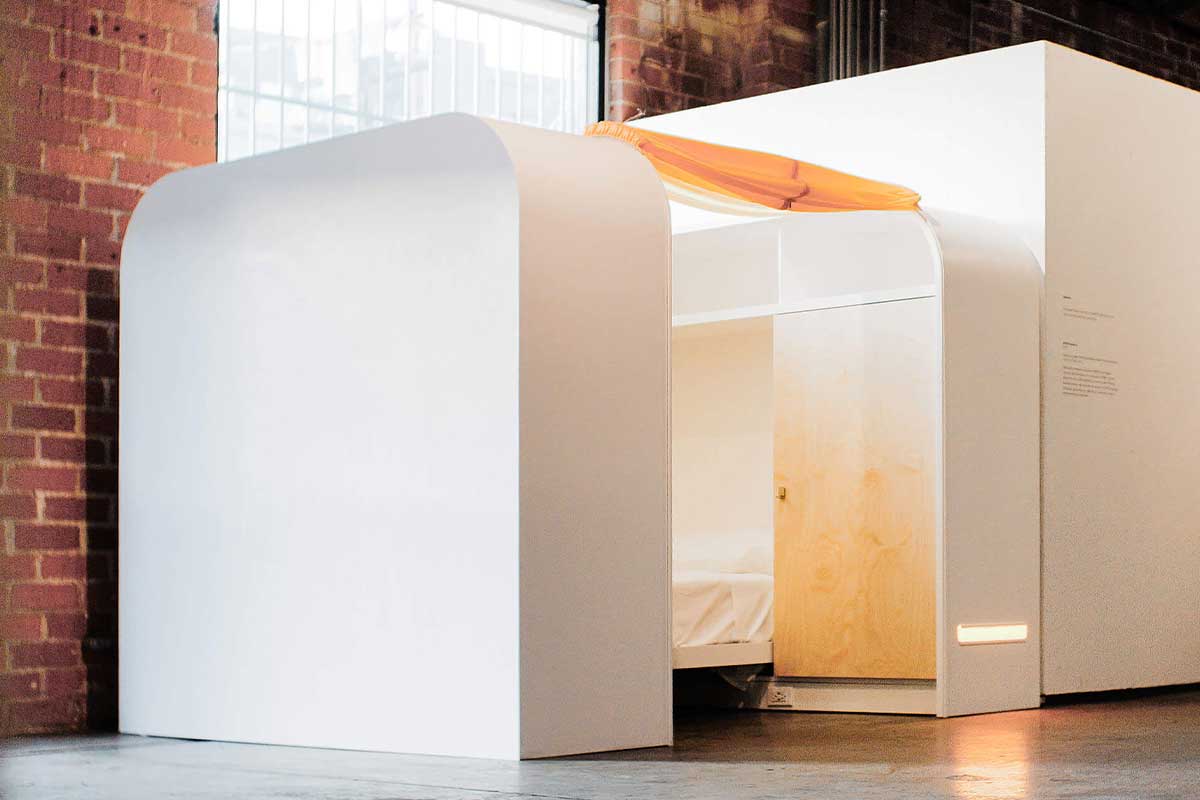
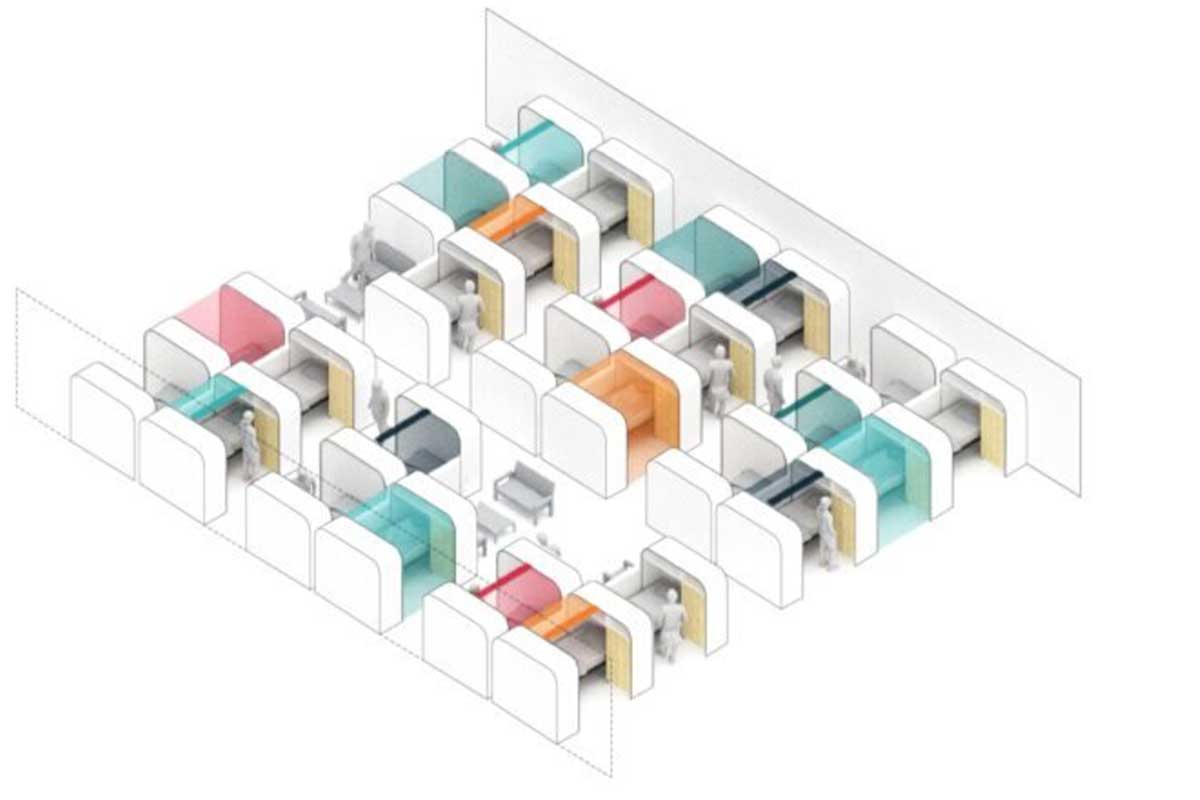
These units can be combined to allow couples or families to share a larger set together.
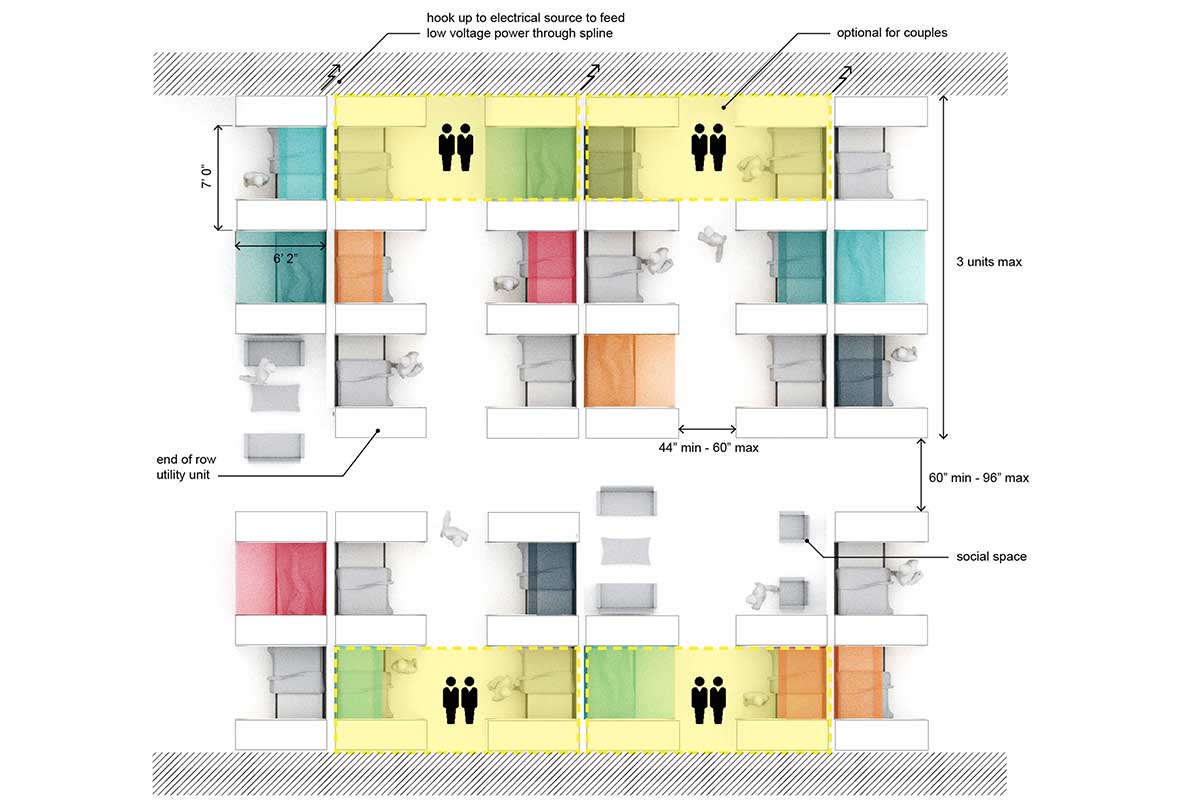
These modular units have already been installed at King Solomon’s Village, a shelter facility located in South Los Angeles, with a 100-person capacity. This shelter has undergone a significant upgrade after being converted from a dormitory-style living space to a private domicile space through the usage of modular units.
Actionable Steps
We can replicate the King Solomon’s Village Shelter prototype by implementing modular units in the Wards Island men’s shelter. This specific shelter is known for its low quality of life, as seen firsthand by the Public Advocate, and would be a great candidate for improvement and innovation through the installation of these modular units. After the installation of modular units in one shelter, one congregate shelter in each borough should be partitioned, with the eventual goal of converting all shelters.
Conclusion
The homelessness crisis cannot be solved through shelter redesign alone, nor should improvements to congregate shelters replace investments in permanent and supportive housing. However, as long as tens of thousands New Yorkers continue to depend on and reside in the shelter system every night, the city has a responsibility to provide more than just a bed. Dividing congregate shelters into more private domiciles would represent a tangible step towards establishing a shelter system that not only accommodates New Yorkers experiencing homelessness but also treats them with the respect and dignity that they deserve.
By Allyson Poyker, Policy and Legislation Intern
Don't miss the latest from the Office of the Public Advocate. Subscribe to the Advocate Bulletin newsletter.